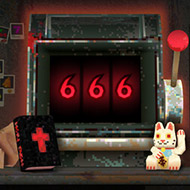
You plug in a fresh microphone, load into an empty content library, and realize there isn’t a single character waiting for you to imitate. That blank slate is the first thing every new player runs into with The Choicer Voicer, a party game built entirely around vocal impressions instead of reflexes or trivia. Rather than handing you a roster of jokes already written, the game drops you into a judge panel, a host, and a studio, then waits for you to decide what actually gets performed.
| Genre |
Party / vocal performance |
| Platform |
Windows |
| Players |
1–4 local, plus a Twitch chat mode |
| Status |
Early access alpha |
Building Your First Voice Pack for The Choicer Voicer
The first real task in most sessions isn’t a round at all — it’s assembling a voice pack. A voice pack is just a folder of audio clips, and dropping files into that folder is genuinely most of the setup work. Because so little comes pre-loaded, players talk about “packs” the same way people discuss mods for a completely different game: a meme pack, a musical pack, a niche-quote pack, each one changing what the judge panel and host actually react to. Two people running the same install of the game can end up with wildly different sessions depending entirely on what they’ve loaded in.
Beginners tend to get one thing wrong early on. They drop in a single small pack, burn through it in ten minutes, and assume that’s the entire game. It isn’t. The judge panel, the studio backdrop, and the host character can all be swapped independently through the Customize menu, so the same handful of audio clips can be replayed against a completely different presentation and still feel fresh.
- Judge packs — change who’s scoring and how they react
- Studio packs — change the visual backdrop of the show
- Host packs — change who introduces each round
- Voice packs — change what’s actually being performed
Once a pack exists, it slots into every other layer at once.
Judge Panel Scoring and What Actually Earns Points
The core loop is simple to describe and harder to be good at. A clip plays, you attempt to recreate it out loud, and the judge panel scores the attempt. Players who stick with the format start noticing patterns in what earns higher marks — clarity, timing, and pitch matching all seem to weigh in — even though the exact judging logic is never spelled out anywhere in the interface. That opacity is one of the more debated aspects among people who treat the game as a real competition rather than a one-off party bit.
A performer who just wants an excuse to do a ridiculous accent gets something very different out of a round than a competitive scorer chasing consistent high marks from the same judge panel. Rounds are kept short by design, which is what lets a four-player studio keep moving instead of stalling on one nervous attempt.
Studio Sessions Versus Dub Mode
Outside the scored studio format, The Choicer Voicer includes a separate Dub Mode, where you record a voiceover over a chosen scene instead of chasing a number. Dub Mode strips away the judging pressure entirely, which makes it a natural entry point for a first-time player who wants to try the vocal side of the game without a panel immediately weighing in on the attempt.
By the time you’ve built a couple of packs and tried both formats, the split becomes clear: the studio is where competitive energy lives, and Dub Mode is where the performer type tends to camp out instead. Most modes are currently singleplayer at their core, with the four-player local studio standing as the main way to actually share a couch session.
Running The Choicer Voicer for a Twitch Audience
A third player type shows up specifically for streaming — someone who cares less about the studio’s internal scoring and more about how cleanly an audience can react. The Choicer Voicer includes a mode built for exactly this, where commands typed by Twitch chat feed directly into a round instead of a fixed judge panel casting the votes. There’s even a content pack type built around letting viewers vocalize as part of the show themselves, turning a solo stream into something closer to an audience-driven segment.
This variant is what pulled a lot of early attention toward the game inside streaming circles, since it gives chat a fast way to react to a bit the moment it happens, rather than waiting on a computer-judged score that nobody watching can see the logic behind.
Common Questions About The Choicer Voicer
How do you fix a microphone that won’t record in-game?
The most consistently reported problem is microphones failing to capture audio during a round, which can make a session unplayable. This has been tied to surround-sound audio setups conflicting with how the underlying engine handles microphone input. Players have worked around it by rerouting audio through a virtual output device and monitoring it externally, since there’s no built-in fix yet in the current alpha build.
How many players can join a session of The Choicer Voicer?
The local studio format supports up to four players sharing the judge panel at once. The Twitch-facing mode sidesteps that cap entirely, since chat votes replace the fixed panel and effectively let an unlimited audience weigh in on a single streamer’s performance.
How do you actually make a voice pack?
Making one is intentionally low-effort — you collect or record short audio clips for whatever character or personality you want represented, then drop those files into the correct pack folder using the naming pattern the game expects. No scripting or modding tools are required, which is a big part of why the community has produced usable packs this early in the game’s development.
The Choicer Voicer never runs out of new material as long as someone keeps feeding it, which is really the whole point once you get past the empty-library problem. Whether a session lands depends less on the judge panel’s exact scoring formula and more on whether you and your group are willing to build a pack worth performing — Dub Mode is always sitting there as a lower-pressure way in if the studio’s judging feels too opaque on a first try.