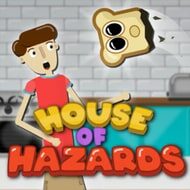
Step into the chaotic domestic arena of House of Hazards, where a seemingly ordinary home is transformed into a labyrinth of peril. The core premise thrusts players into a space teeming with surprise traps, animated objects, and erratic dangers that systematically sabotage every simple chore. This experience merges precise timing, strategic pathing, and acute environmental awareness. Each distinct room houses its own brand of chaos, compelling players to decode specific hazard patterns while racing to finish objectives before being thwarted or eliminated.
Room Structure, Task Flow, and Hazard Activation
The fundamental architecture of House of Hazards is designed around achieving goals amidst an ever-present threat of domestic sabotage. Objectives range from using a sink to retrieving items or navigating to specific markers, all while dodging swinging pendulums, tumbling debris, and triggered mechanical snares. Deciphering the rhythmic cycle of each danger is paramount, particularly in high-traffic zones like the kitchen and hallway where mistimed moves often result in instant failure.
- Hazard pattern reading: Decode the behavior of oscillating lamps, rotating platforms, and sudden drawer slides.
- Task prioritizing: Tackle distant objectives early to minimize exposure in later stages.
- Movement positioning: Maintain proximity to designated safe zones when hazards are active.
Character Interaction, Multiplayer Dynamics, and Competition
House of Hazards earns its reputation through the frenetic interplay between characters. As players navigate toward goals, they can be shoved, obstructed, or struck by rivals who may intentionally trigger traps. This creates layers of unpredictable, emergent chaos where split-second decision-making is vital. Success hinges on identifying brief safe intervals between trap cycles and predicting the movements of opponents to sustain progress.
- Separation strategy: Avoid clustering with others to prevent catastrophic chain reactions.
- Trap awareness: Scan for active trap states before finalizing your route.
- Recovery planning: Always mentally note the closest safe haven for emergency retreats.
Common Questions and Practical Survival Methods
A frequent player inquiry involves completing tasks efficiently amid recurrent dangers. One proven tactic is to adopt a measured pace in hazard-dense segments, accelerating only during predictable windows. Another key method is memorizing task sequences, as some objectives force perilous re-entries into previously navigated rooms. Understanding which traps have instant triggers versus delayed activations is crucial for mitigating unnecessary risk.
- Motion control: Modulate movement speed relative to the concentration of threats.
- Risk mapping: Pre-identify rooms with the highest lethality before crossing their thresholds.
- Anticipation timing: Initiate reactions based on predictive cues, not just full hazard animations.
Ultimately, House of Hazards presents a frenzied test of environmental literacy, pattern recognition, and adaptive reflexes. Mastery emerges from consistent practice, leading to fluid navigation and the ability to accomplish tasks with heightened precision and minimal disruption.