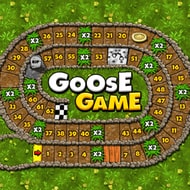
Goose Game places you in control of a mischievous goose moving through compact, puzzle-like stages. The focus is on short challenges where you guide the bird, avoid hazards, and complete bite-sized objectives. Many players return to Goose Game to practice timing, explore hidden actions, and test optional tasks scattered through the map.
Main Actions and Environmental Interactions
Each stage encourages experimentation. Goose Game uses simple controls that allow you to waddle, flap, grab items, and disrupt characters encountered on the map. Because the structure is objective-driven, learning what you can interact with and how those interactions affect the environment becomes a core part of progress. Some paths require distracting an NPC, while others ask you to manipulate objects to create new routes.
- Stealth tasks that require moving behind obstacles without being spotted.
- Item collection where the goose must gather objects in a specific order.
- Chain reactions created by pushing, dragging, or blocking items in the area.
- Timed challenges that involve reaching markers before a meter runs out.
Progression Structure and Stage Variations
The structure of Goose Game is built around sequences of objectives. Each stage offers new layouts, alternate routes, and opportunities to complete bonus tasks. Some sections include narrow corridors where precision matters, while others expand into wider spaces that allow multiple solutions. Players often experiment with item placement to create shortcuts or bypass obstacles.
- Compact zones with simple tasks and direct objectives.
- Multi-layer spaces containing stairways, gates, and movable barriers.
- Hidden challenges that appear only after a task chain is completed.
- Replay tasks that encourage refining your route and finishing faster.
Tips, Hacks, and Common Questions
Some players seek ways to complete objectives more efficiently. Goose Game allows several clever tricks, such as manipulating item positions early, or pulling NPCs away from important objects by creating noise elsewhere. Although there are no official shortcuts, many players create “self-made hacks” by learning where the AI can be diverted.
- How do you bypass NPCs? Create a distraction by grabbing movable items nearby.
- How to finish tasks faster? Plan routes before moving the goose and place objects in reachable spots.
- How to unlock extra challenges? Complete each zone’s primary list to reveal bonus goals.
- What makes Goose Game engaging? The flexible environment invites experimentation in each stage.
Goose Game remains popular because of its interactive structure, short objectives, and the freedom to approach each challenge through different strategies. Players often revisit completed areas seeking new paths and solutions, making the overall experience varied and rewarding.